
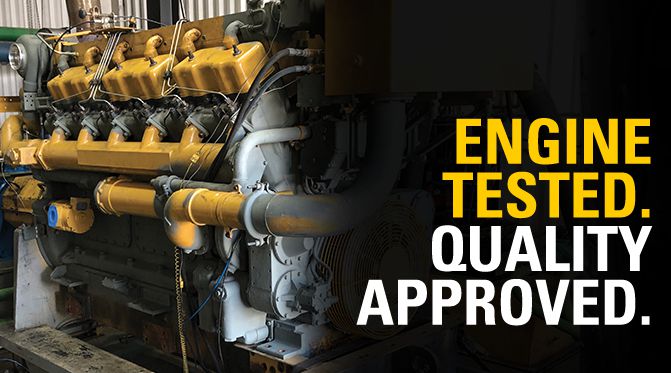
Remanufactured isn't a compromise — if the paperwork is right
There's a persistent assumption that a remanufactured marine engine is a lesser option chosen only to save money. In practice, a properly remanufactured engine — test-run before shipment, with full documentation trail — is a known quantity in a way that a new engine sometimes isn't: it has real running hours behind its rebuild, not just a factory test cycle.
The difference between a good remanufactured engine and a bad one isn't the hardware, it's the documentation. Class societies want to see the rebuild history, the test-run results, and material traceability before they'll sign off on a repower survey. An engine without that paper trail creates delays regardless of how sound the mechanical work actually was.
Repower decisions are a fleet decision, not a single-vessel decision
If you're sourcing an engine for one vessel in a fleet, it's worth asking whether matching make and model across the fleet is worth a slightly longer lead time. Standardizing engines across a fleet simplifies spare parts inventory, crew familiarity, and maintenance scheduling in a way that's easy to undervalue when you're only looking at the immediate repower.
What actually determines lead time
Engine lead times are driven less by the engine itself and more by the accessory package around it — mounts, couplings, exhaust systems, and control wiring specific to the vessel or application. Sourcing the base engine is often the fast part; matching the ancillary package to an existing installation is what stretches a timeline from six weeks to twelve.
If you're working to a drydock or outage window, get the ancillary package scoped and confirmed before you commit to the window — not after the engine has already shipped.
What we'd tell a buyer before they sign
- Ask for rebuild history and test-run documentation on any remanufactured engine — treat its absence as a real gap, not paperwork.
- Consider fleet-wide standardization before committing to a one-off engine match for a single vessel.
- Scope the ancillary and mounting package early — it usually determines the real lead time, not the base engine.
- Confirm what documentation your class society needs before survey, and get it from the supplier up front.